

Hey all, Jason here.
Somehow, we’re closing in on the end of February already! Just two weeks from now, I’ll be kicking off the spring conference season, attending Fintech Meetup in Las Vegas.
I’ll be moderating two session there on — you guessed it! — banking-as-a-service: one Monday at 1:00pm and the other Tuesday at 9:15am (full agenda here.) I’ve already put together outlines for the sessions, so hopefully not too much in BaaS world changes between now and then…!
If you enjoy reading this newsletter each Sunday and find value in it, please consider supporting me (and finhealth non-profits!) by signing up for a paid subscription. It wouldn’t be possible to do what I do without the support of readers like you!Cheese, A Neobank For Asian-Americans That Pivoted To Credit Building, Calls It Quits
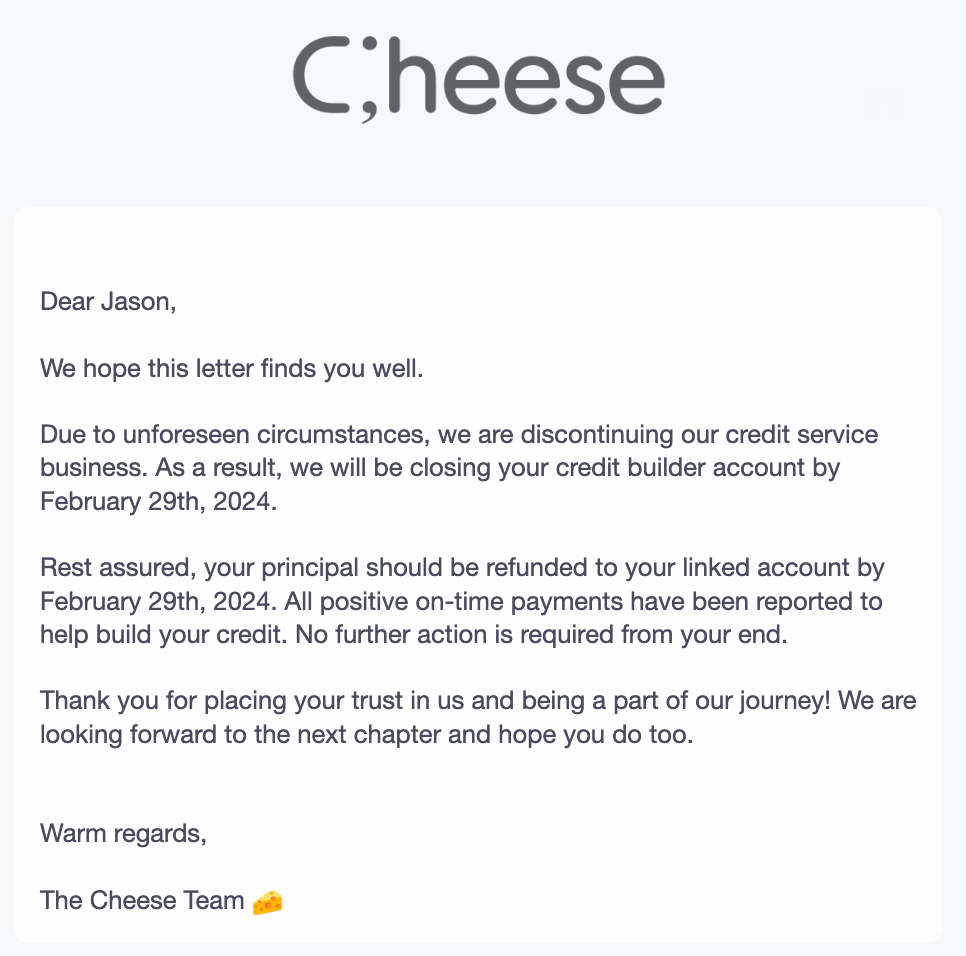
Startup Cheese, which began as a neobank targeting Asian-Americans, before pivoting to offering credit building loans, informed users last week that it is shutting down due to “unforeseen circumstances.”
In its most recent incarnation, Cheese largely served as a front-end that facilitated loans through banking-as-a-service platform Synapse, which holds lending licenses in some states.
Credit building loans like the ones offered by Cheese and Synapse work by taking a user’s loan proceeds and placing them in a sort of escrow account while a user makes repayments, which are furnished to the major bureaus to build their credit history. When the user successfully completes repaying the loan, the amount held in escrow is released to them, less any applicable fees or interest.
Revenue from the product is typically minimal — in Cheese’s case, the Synapse-originated loans carried an interest rate of 5%, equating to an $11 finance charge on a $500 credit builder loan repaid over 12 months.
It’s not clear how revenue generated from these loans was shared between Synapse and Cheese, or if Cheese had any other sources of income.
In an email to Cheese users last week, the company said that accrued principal should be refunded by the end of February and that all positive on-time payments would be reported to bureaus to help users build their credit history.
Still, it’s difficult to predict how the company’s unfulfilled promises will impact individual users. Reporting of a new tradeline, even without a hard inquiry, can actually lower a user’s credit score, by decreasing the average age of their accounts.
Making recurring, on-time payments would generally outweigh any hit from opening the new account — but users who’ve had their account closed shortly after opening it won’t have that opportunity.
Subprime Card Startup Mission Lane Replaces CEO, Raises $50 Million From QED and Invus In Internal Round
Mission Lane, spun off from payday lending startup LendUp prior to its liquidation, is replacing its CEO and has quietly raised $50 million in capital from existing investors QED and Invus in an effort to get back on track. (Disclosure: I previously worked for LendUp, but have no connection or economic interest in Mission Lane.)
The company, sometimes referred to as “Capital Two” by industry insiders, owing to links to the original data-and-analytics-driven subprime card giant, was spun off from LendUp in 2019.
Since then, the company has been helmed by Shane Holdaway, who previously spent about 14 years in various roles at Capital One and had a brief stint at Barclays’ US unit before taking the reins at Mission Lane in 2019.
During Holdaway’s tenure, the company launched an ill-fated effort dubbed Earn, designed to help gig workers increase their income and better manage their money.
The company also acquired Honeydue, which it leveraged to launch its own spending account and debit card, the Mission Money Card. Both initiatives were ultimately unsuccessful and shut down.
Holdway’s CEO role is being filled by existing Mission Lane board member Brandon Black. Black started his career at Capital One and served in senior roles, including as CEO, at debt collection behemoth Encore Capital Group for approximately 15 years, though Black hasn’t held a hands-on operating role in some eight years, per his LinkedIn.
According to the press release announcing Black’s appointment, the company concurrently closed additional funding from Invus Opportunities and QED.
The release didn’t specify the amount of funding raised, but sources with direct knowledge of the matter indicate QED and Invus put in an additional $50 million.
A representative for the company neither confirmed nor denied the amount raised.
How “Stable” vs. “Fragile” Households Use BNPL
The Fed’s Liberty Street Economics blog is out with a new analysis looking at differences in how financially “stable” vs. “fragile” households use buy now, pay later.
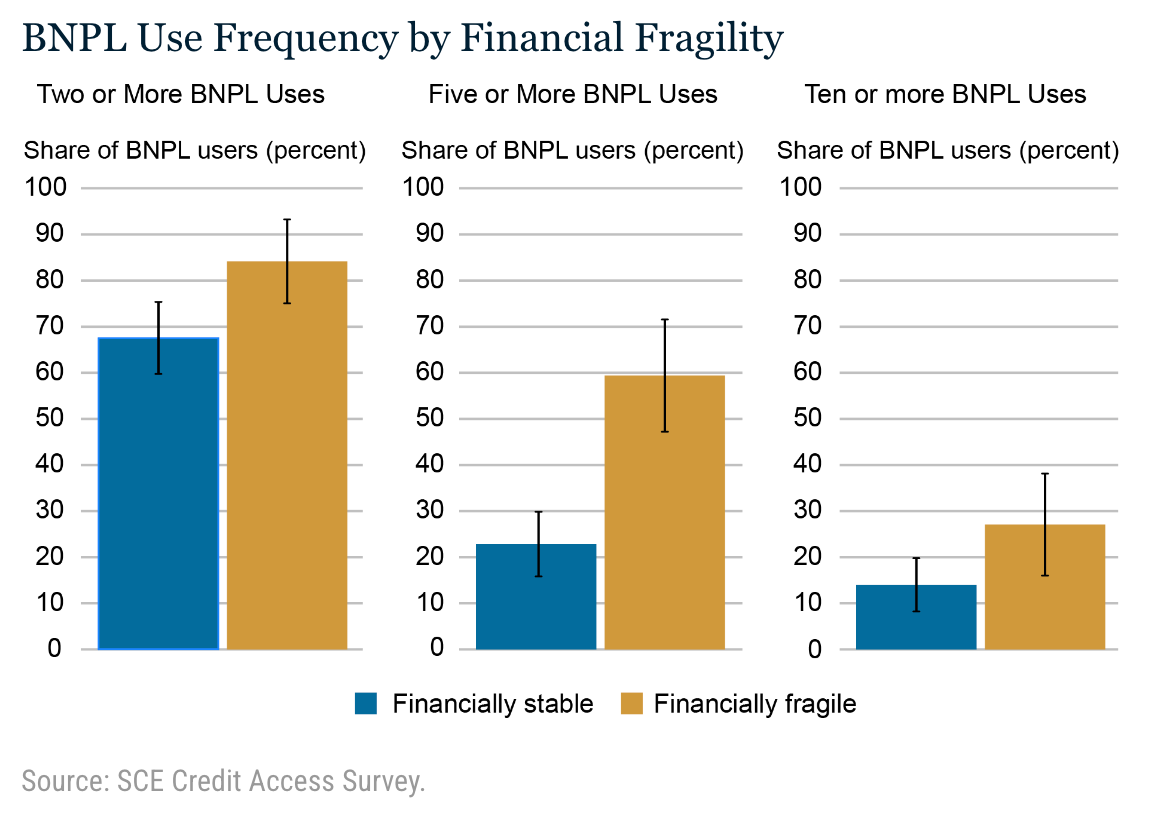
While households in both categories make use of the financing mechanism, the authors found more fragile households tended to use BNPL plans more frequently and for smaller purchases than more financially stable households.
The data show both stable and fragile households were likely to have used BNPL financing more than once in the preceding 12 month period:
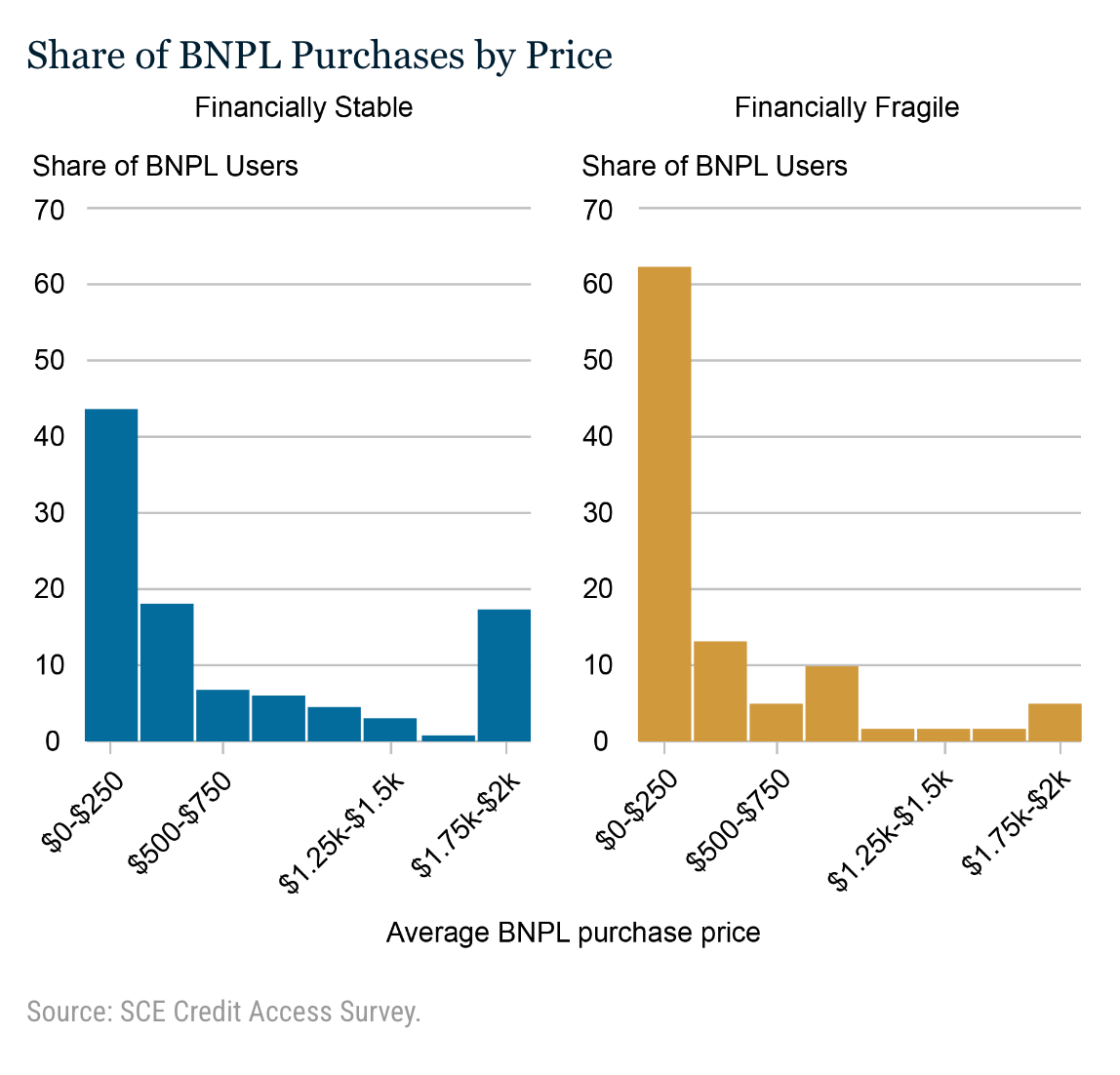
In addition to differences in frequency of use, the types of purchases households used BNPL for also varied.
Fragile households were more likely to use BNPL for smaller purchases, those of $250 or less, than stable households.
Stable households are much more likely than fragile ones to use BNPL to finance a large purchase of $1,750-$2,000.
Interestingly, the authors don’t find that household income is the main driver of these disparities.
Even when controlling for income, they find that fragile households, defined as a credit score below 620, being declined for credit in the past year, or falling 30 or more days delinquent in the past year, use BNPL for purchases that are, on average, $220 smaller than stable households.
Other Good Reads
Stabilizing Fake Banks (Todd Phillips and Matthew Bruckner)
Federal regulators are probing Cash App (NBC News)
Heartland Tri-State Bank Material Loss Review (FDIC Office of Inspector General)
Supervision with Speed, Force, and Agility (Fed Vice Chair Barr)
About Fintech Business Weekly
Looking to work with me in any of the following areas? Email me.
Vendor, partner & investment opportunity advice and due diligence
Fintech advising & consulting
Sponsoring this newsletter
News tip or story suggestion — reach me on Signal at +1-316-512-1571