

Hey all, Jason here.
I won’t lie, I had a bit of FOMO last week, seeing posts from folks in New York to attend Finovate — both because of the event, but maybe more so missing a good excuse to travel to NYC. I actually lived in New York twice, in Brooklyn both times. During my second stint, I lived in downtown Brooklyn, a short commute from Goldman’s headquarters across the street from 1 WTC. The post-9/11 reconstruction of that area was still ongoing during my time at Goldman, and I remember when the visually stunning Oculus finally opened.
Five neobank leaders. One agenda. Only at NerdCon.
Partner content: Nubank just launched in the US. Revolut just cleared the OCC for a national bank charter. Chime just agreed to buy its sponsor bank. OnePay doubled monthly actives in a year on Walmart’s distribution alone. And Plata secured its full Mexican banking license this year, ahead of both Nubank and Mercado Pago.
Five different stacks. Five very different unit economics.
All five are walking through what they’re building, how they’re building it, and the bets they’re making along the way.
Fintech Business Weekly readers save 20% with code FBW20.

Things To Know & Other Good Reads
Expanded Examination Cycle Eligibility: Interim Final Rule (OCC / Interagency)
OCC Delivers on Community Bank Comeback, Reduces Burden for Third-Party Risk Management (OCC)
Frequently Asked Questions Regarding Treatment of Verifiable Digital Credentials Under the Customer Identification Program Rule (FinCEN / Interagency)
Nuvei Must Implement Robust Merchant Screening Practices and Pay $4.85 Million to Settle FTC Charges that the Firm Facilitated Merchant Fraud (FTC)
Bank Financial Disclosures: Actions Needed to Improve Oversight of Information Provided to Investors (Government Accountability Office)
The Diffusion of Bank Reserves in the U.S. (Federal Reserve Bank of Richmond)
Better Markets Sues the Federal Reserve and Vice Chair Bowman for Corrupt Collusion with Wall Street Banks Over Capital Rulemaking (Better Markets)
Joint Letter Urging the Senate to Amend the Clarity Act (ABA, ICBA, State Banking Associations)
Robinhood Wins a New Role in the Oura IPO: Underwriter (Wall Street Journal)
The Five Deals That Made Apollo (Net Interest)
Hard Core Deposits: What, today, qualifies as a core deposit? (Fintech Takes Banking)
Kapital Raises $125M in New Financing from Tru Arrow Partners, Fasanara Capital (PR Newswire)
Arbiter AI Agents Are Now Integrated into LexisNexis Bridger Insight XG (Castellum.AI)
Listen: Are Fintech Standards Fit For Purpose? (Fintech Business Weekly with Alex Johnson & Jason Henrichs)
*Links in this section may be sponsored. Want to see your news included here? Find out how.
Regulators Move To Rescind Post-Synapse Risk Guidance, Lay Groundwork For Fintech Standards
While admittedly a somewhat arbitrary line, it is fair to argue the wave of banking-as-a-service-related public bank enforcement actions started with the order Blue Ridge Bank entered into in August, 2022. Blue Ridge was hit with a second regulatory action less than 18 months later, moved to wind down its BaaS activities, and, last month, announced it would be acquired for just $448 million.
In the years following that first action against Blue Ridge in 2022, there have been approximately 15-20 others banks hit with enforcement actions related to their third-party programs, depending on exactly how you define such partnerships.
The consent orders varied substantially in their scope and severity, and, in retrospect, some of them may have been overkill, but, viewed in aggregate, the actions served to send a clear message: federal banking regulators had woken up to the size, scope, and potential risks of fintech-bank partnerships.
Against the backdrop of tougher supervisory exams taking place behind closed doors and the public enforcement actions, regulators attempted to provide more insight into how banks should manage the risks presented by these types of third-party relationships by releasing a slew of guidance.
In 2023, the Office of the Comptroller of the Currency, the Federal Deposit Insurance Corporation, and the Federal Reserve Board of Governors rescinded third-party risk management guidance that had been issued in 2013 and a supplemental FAQ that had been released in 2020, replacing the 2013 guidance with an updated document.
It’s worth reinforcing that guidance is just that — it does not carry the force of law, nor is it a binding regulation, though it does provide insight into how regulators think about a type of problem and what on-the-ground supervisors may be looking for during bank examinations.
The updated 2023 guidance was followed in May 2024 — the same month Synapse’s failure caused $265 million of users’ deposits held across Evolve Bank & Trust, AMG National Trust, and Lineage Bank to be frozen — by a jointly-issued 30-page guide on third-party risk management for community banks.
If the growing number of consent orders stemmed from legitimate if sometimes “check-the-box”-type issues, the Synapse/Evolve crisis made crystal-clear the substantial, material consumer harm that can come from such relationships.
The disaster also illustrates the very real and sizable financial risk third-party relationships can pose to banks: Evolve appears to have spent tens of millions of dollars on legal and consulting expenses as a result, and Lineage had to be recapitalized.
This is hardly the only example of consumer harm or of a financial institution experiencing significant financial repercussions from a third-party relationship.
When Vystar Credit Union’s transition to “dysfunctional” core provider Nymbus caused an outage of some of its systems, customers were left without access to some basic banking functions and features for weeks or months. In 2024, Vystar ultimately entered into a consent order with the Consumer Financial Protection, which included a $1.5 million penalty.
More recently, the collapse of small business charge card startup Parker this June sparked a fight between its bank partner, Patriot, and its debt provider, Silicon Valley Bank, over which party is the rightful owner of $21 million in receivables.
And Coastal Community Bank’s $42 million Q2 loss, revealed in its end-of-July earnings release, was driven by a $68.8 million charge apparently driven by financial struggles at a third-party partner, LendingPoint.
These are but a handful of the more noteworthy and publicly known examples of consumer harm and material financial risk that can be associated with banks’ use of third-parties in delivering products and services.
Regulators Issued Warning In Wake of Synapse-Evolve Disaster
It is widely understood that the interagency Joint Statement on Banks’ Arrangements with Third Parties to Deliver Bank Deposit Products and Services published in July 2024 was essentially a direct response to the Synapse-Evolve disaster and the serious (and still ongoing) harm it caused end users.
That statement, jointly issued by the OCC, FDIC, and the Fed, explicitly reinforced that “[b]anks are neither prohibited nor discouraged from providing banking services to customers of any specific class or type, as permitted by law or regulation.”
The regulators acknowledged the varying kinds of third-party relationships that could be involved in delivering deposit products, writing (spacing adjusted and emphasis added):
In some arrangements, banks rely on one or multiple third parties to maintain the deposit and transaction system of record; process payments (sometimes with the ability to directly submit payment instructions to payment networks); perform regulatory compliance functions; provide end-user facing technology applications; service accounts; perform customer service; and perform complaint and dispute resolution functions.
These third parties are sometimes referred to as intermediate platform providers, processors, middleware providers, aggregation layers, and/or program managers.
A bank’s use of third parties to perform certain activities does not diminish its responsibility to comply with all applicable laws and regulations.
According to the statement, the regulatory “agencies have observed an evolution and expansion of these arrangements to include more complex arrangements that involve the reliance on third parties to deliver deposit products and services.”
The statement appears to directly speak to the gaps and risks that led to the freeze of users’ funds in the Synapse-Evolve situation, saying, (emphasis added) “A potential lack of sufficient access by a bank to the deposit and transaction system of record and other crucial information and data maintained by the third party can impair the bank’s ability to determine its deposit obligations. In some circumstances, such uncertainty can lead to delays in end-users’ access to their deposits, which in turn can expose the bank to additional legal and compliance risks.”
The statement further flagged the risk inherent in relying on third parties to carry out regulatory functions on banks’ behalf, particularly as it relates to areas like BSA/AML risk, saying, “Reliance on third parties to perform regulatory compliance functions may increase the risk of the bank not meeting its regulatory requirements. Specifically, the third party may perform certain regulatory compliance functions such as monitoring and reporting suspicious activity, customer identification programs, customer due diligence, and sanctions compliance on behalf of the bank.”
Regulators also spoke to the nature of “direct” vs. “indirect” relationships between banks and their service providers, a concept mentioned in other statements and guidance as “n-th” party risk, in which banks do not have a direct contractual or operational relationship with downstream firms that are involved in providing products and services. Some in industry also refer to this as a “nested” relationship structure. The statement notes that “[m]ultiple levels of third-party and subcontractor relationships, where the bank does not have direct contracts with entities that perform crucial functions may pose challenges to the bank’s ability to identify, assess, monitor, and control various risks.”
An example of a highly visible area in which banks have struggled to manage risk, particularly in such “nested” relationships, is ensuring the compliance of how products are being marketed and, particularly, claims related to FDIC coverage.
The false sense of security end users had from “FDIC” and “deposit insurance” claims was a recurring theme during the collapse of several crypto firms in 2022, and was particularly acute as Synapse-Evolve victims struggled to understand why such coverage didn’t protect them from harm.
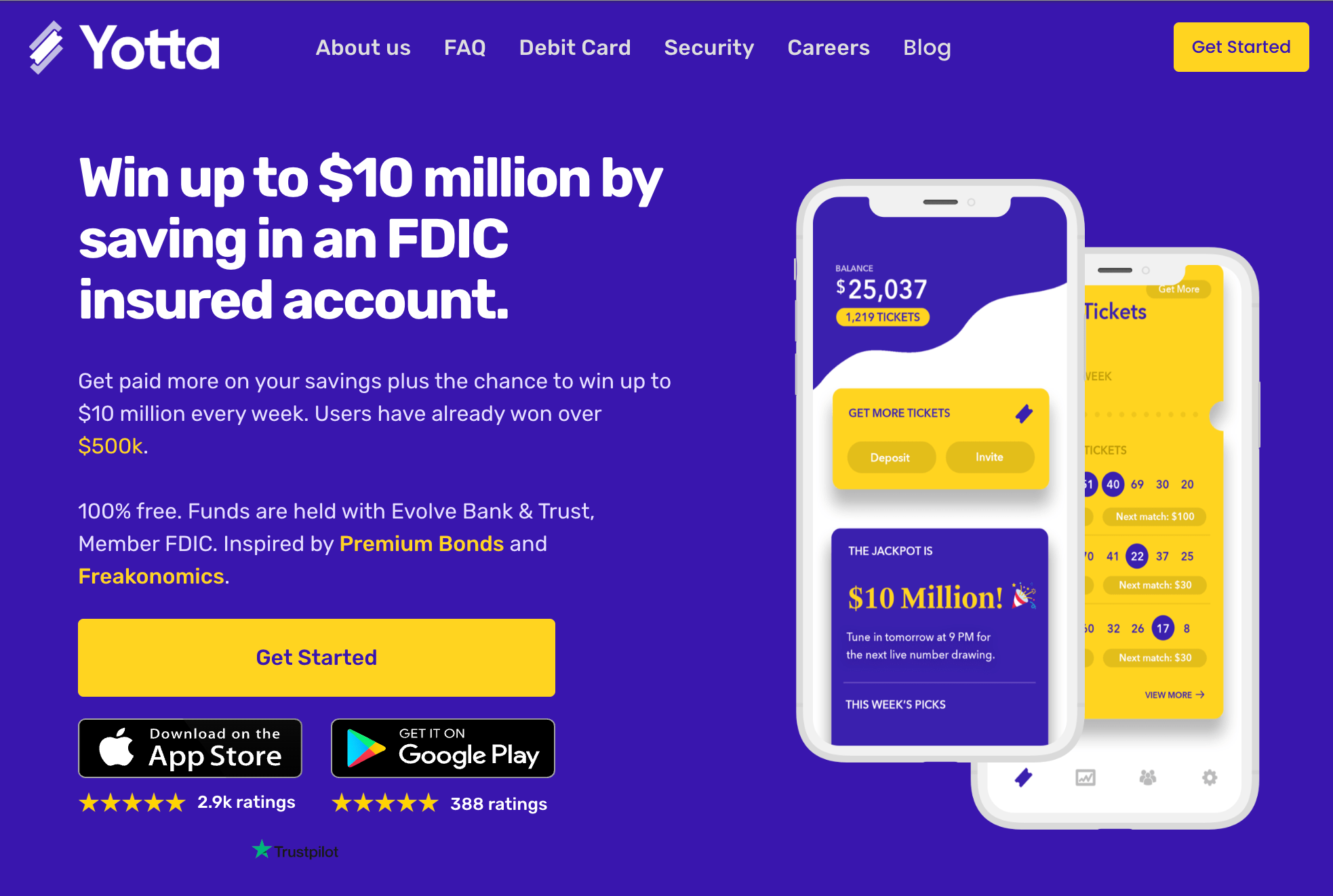
The 2024 joint statement warns of potentially misleading statements and marketing causing “end user confusion” and the “misrepresentation of deposit insurance coverage,” saying, “Some nonbank third parties could be reasonably mistaken for an insured depository institution (IDI) by end users, particularly when they refer to FDIC deposit insurance in marketing and other public-facing materials. End users may not be aware that access to their funds may depend on the third party and that deposit insurance does not protect against losses resulting from the failure of the third party.”
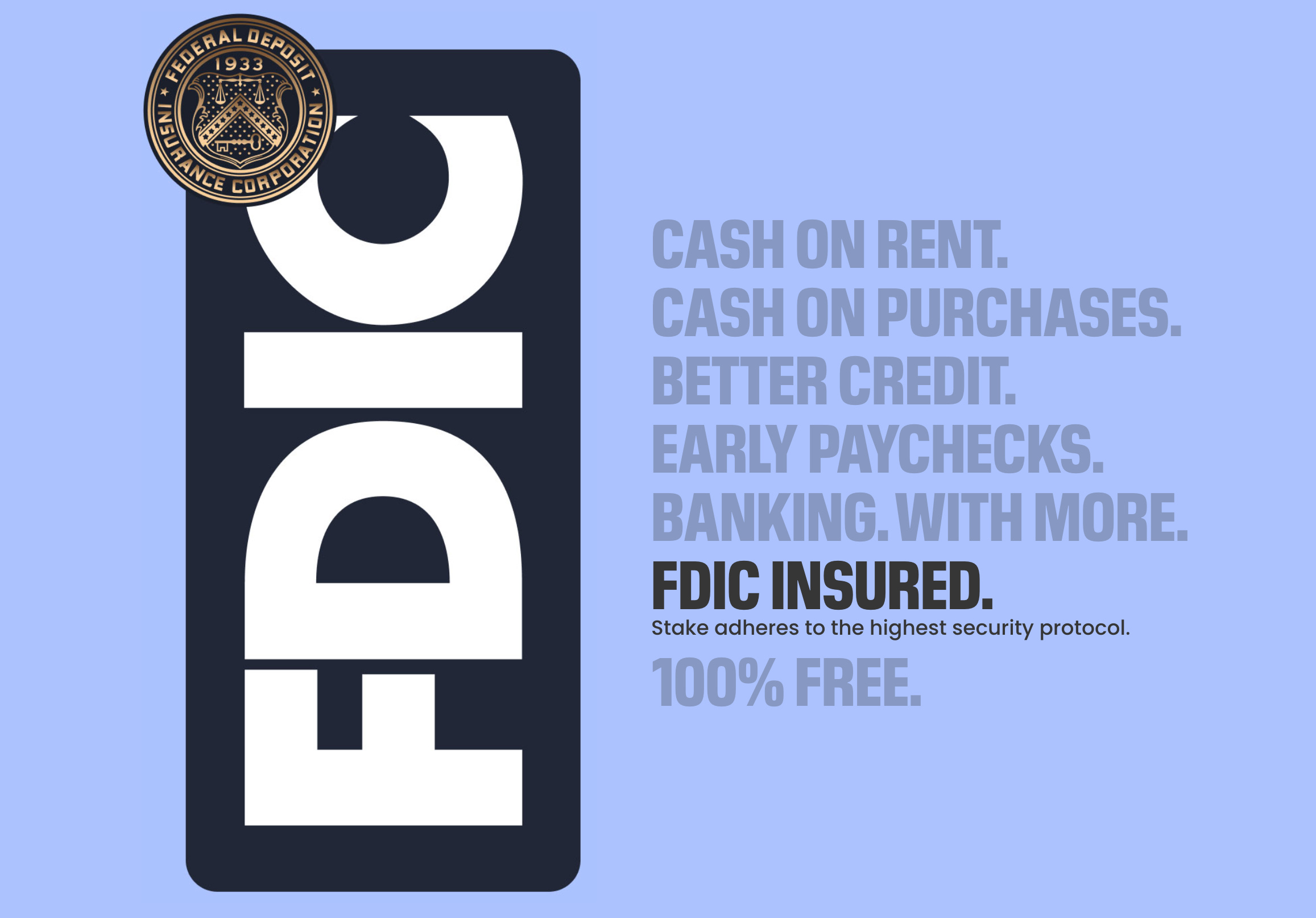
Such risks have, historically at least, been fairly widespread. A March 2024 review of middleware provider Unit found that 40% of its programs had potential issues with how they described the products and services they offered and FDIC and deposit insurance-related claims.
The joint regulatory statement, like the 2023 third-party risk guidance and the 2024 guide for community banks, does not carry the force of law and is non-binding.
Despite the officially unexplained loss of as much as $95 million in deposits, the only potentially binding regulatory response to the Synapse collapse, a recordkeeping and reconciliation rule introduced in the waning days of the Biden administration during Martin Gruenberg’s time as FDIC chair, went nowhere and appears, for all intents and purposes, to be dead in the water.
Now, amid a wider regulatory rollback, policymakers are moving to rescind and replace existing guidance, including the joint regulatory statement released in the wake of the collapse of Synapse.
Fintech Business Weekly is made possible by the generous support of paying subscribers — bringing you independent analysis of banking, fintech, and crypto without fear or favor.
You can support my work by becoming a paying subscriber if you aren’t already. Paying subscribers enjoy:
access to the entire archive of nearly six years of newsletters
extended versions of the weekly newsletter, with additional content and analysis
and (for founding member tier) quarterly personal 1:1 fintech Q&A / strategy calls with me, tapping into my unparalleled knowledge of the intersection of banking and fintech and experience working in the sector, including helping to launch Goldman Sachs’ retail bank Marcus
You can also support Fintech Business Weekly by sponsoring a newsletter or podcast, putting you in front of 93,000+ of the most influential decision makers in banking, fintech, and crypto. Learn more about sponsor opportunities or request a media kit by dropping me an email.
New Guidance Lays Groundwork for Fintech Standard Setting Organizations
On Friday, the three federal banking regulators, the OCC, FDIC, and the Fed, were joined by the National Credit Union Administration in introducing new proposed third-party risk management guidance.
(They also released a statement on “Community Banks’ Engagement with Core Service Providers,” which is widely being interpreted as something of a shot across the bow of FIS, Fiserv, and Jack Henry; the oligopolistic nature of core banking tech and its relationship to fintech is something I discussed in last week’s podcast with Alex Johnson and Jason Henrichs.)
The agencies are seeking comment on the new proposed guidance, which, if finalized, would replace the aforementioned 2023 guidance and supplemental third-party risk management resources, including the post-Synapse joint statement on deposit product risk.
According to the press release, the updated proposed guidance “reflects the agencies’ supervisory experience and lessons learned from examining financial institutions’ third-party risk management practices” and is “intended to assist banks and credit unions to better align and tailor their third-party risk management practices to the risks of individual third-party relationships.”
The introduction to the guidance provides additional context on the regulators’ move, saying that they believe the existing 2023 guidance and supplemental resources have been interpreted in an “overly broad” manner and “with an insufficient focus on tailoring its risk management principles.”
Specifically, the new document argues, the 2023 guidance “unintentionally incentivized overly-process-driven approaches that fail to prioritize higher-risk relationships and focus risk management efforts and resources where they are needed.”
This, the regulators argued, has discouraged banks and credit unions from pursuing opportunities with “newer and innovative third parties” because the existing guidance suggests such relationships entail elevated risks — inhibiting banks and credit unions from enhancing access to financial products and services and creating economic opportunities.
Interestingly, the document also notes that “banking organizations have reported maintaining relationships with third parties that may not best meet their needs, including where the third party cannot provide the banking organization with best-in-class products and services, has breached contract terms, or offers above-market pricing,” which appears to be a not-so-veiled reference to legacy core providers.
Echoing sentiments and policy proposals seen in other areas of bank regulation, the document argues revised guidance would “enable banking organizations and examiners to focus on material financial risks and violations of laws and regulations rather than ineffective and counter-productive check-the-box exercises.”
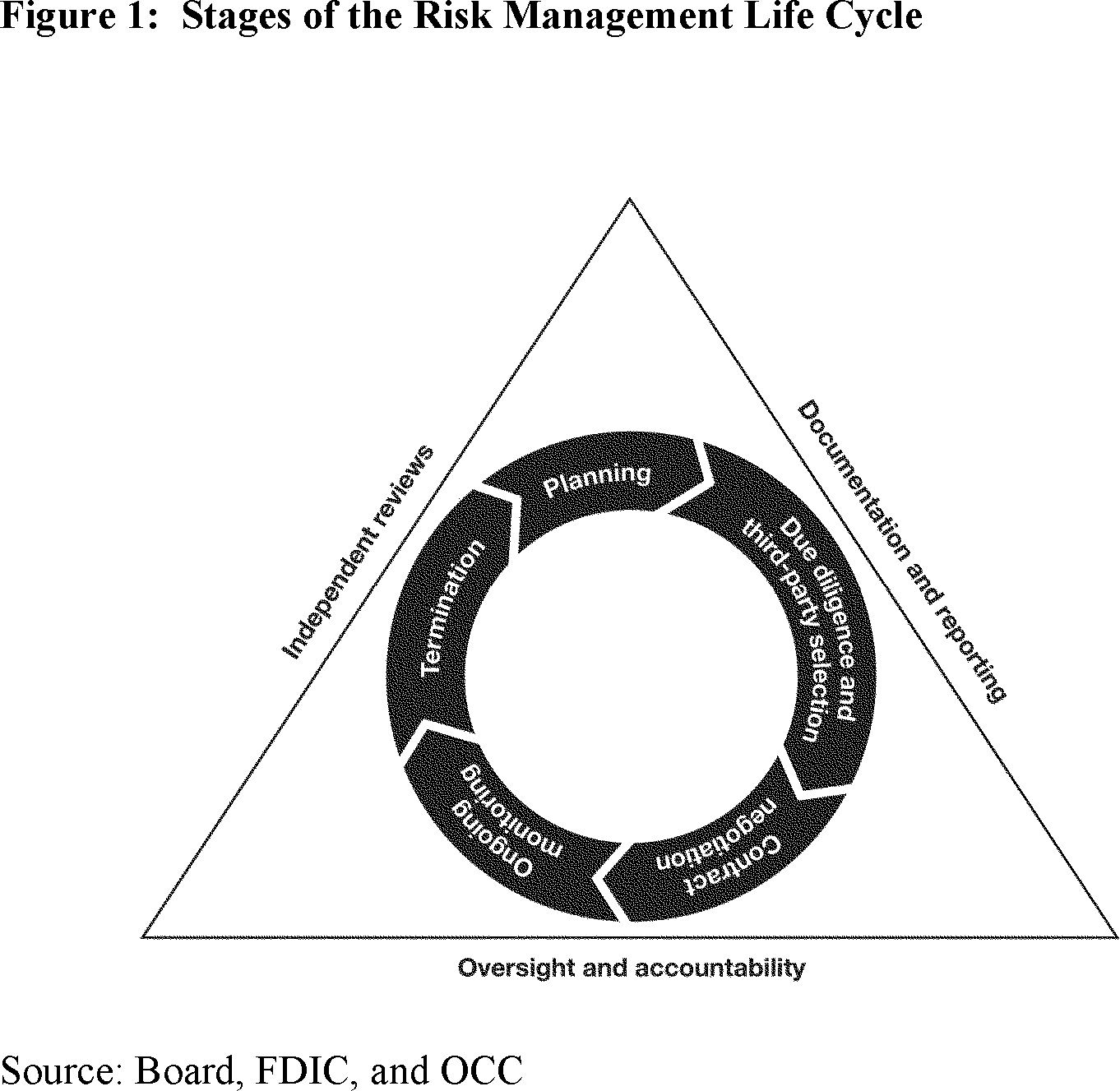
The proposed guidance is structured generally comparably to the existing guidance, speaking to the stages of third party relationships: due diligence and third party selection; contract negotiation; ongoing monitoring; and termination (though the somewhat nonsensical circle-in-a-triangle diagram is, thankfully, absent.)
One very notable addition, particularly following recent reporting the FDIC is working with banking and fintech trade groups to create a “standard setting organization,” is a section on the “Use of Co-ventures, Consortia, Standard-Setting Organizations, Consultants, and Other Third Parties that Provide Risk Management Services.”
The proposed guidance acknowledges banks can leverage “new arrangements” to manage third-party risk, including:
Participating in a co-venture or consortium that collaborates on an aspect of third-party risk management, such as performing due diligence or developing standard contracts, or use of services from standard-setting and certification organizations that provide risk management and compliance standards for third parties engaging with banking organizations and issue certifications that assess that a third party meets the standards.
Considering the results from services provided by consultants, auditors, or law firms for risk management and compliance purposes.
The proposed guidance argues that such approaches could “create new efficiencies, provide banking organizations additional leverage in conducting due diligence on, negotiating with, or monitoring third parties, and facilitate access to new technologies and strategic expertise.”
The proposed guidance also speaks to the potential for insurance and contractual indemnification to mitigate risk in third party relationships, but notes the need to assess a third party’s ability to meet any obligations and for banks to consider if they have the capacity to cover costs associated with pursuing, filing, disputing, or litigating a claim.
Once the proposed guidance is officially published in the Federal Register, there will be a 60-day comment period.
Because rescinding existing guidance and replacing it with the proposed guidance does not change any laws or binding regulations, in theory, nothing has materially changed; in practice, the shift may be best interpreted as a change in how federal banking regulators think about the risks of third-party relationships and where their priorities lie.
[Paid Subscriber Exclusive] Why Chime is Acquiring Stride, NuBank vs. Revolut, Block Seeks to Charter “Builders Bank & Trust”
The very first issue of this newsletter, on October 4, 2020, focused on the topic of what were commonly referred to as “challenger banks” at the time and, focusing on the U.S. market, analyzed efforts from players like Chime, Varo, Current, Monzo, N26, and Revolut.

Amusingly enough, the third installment of this newsletter covered a report in CNBC that Revolut was “close to” applying for a bank charter in California, something that obviously never came to pass.
Clearly a lot has transpired in the nearly six years since I wrote those early newsletters.
After the paywall, additional analysis on Chime’s plan to acquire its partner bank, Stride; why NuBank is launching in the U.S. via a bank partnership (which I originally reported more than four months ago); and Block seeking its second charter.