

Hey all, Jason here.
If you need another good newsletter read for your long weekend (it’s also a public holiday in the Netherlands on Monday), I recommend giving this newsletter from my industry colleague and friend Alex Johnson a read. The 2020s aren’t the 1970s, but there are structural and, yes, ~vibe~ similarities.
If you rather listen to something, I have two podcasts for you: an episode of Breaking Banks appropriately titled “Is just a little crime OK now or what?,” and, if you missed it, my conversation with merchant connectivity platform Knot’s cofounder and CEO Rory O’Reilly.
Business Banking That Actually Works Globally
Partner content: Limited gives your business bank accounts in the US, Europe, Latin America, Africa, and MENA from one platform.
Issue expense cards, manage team spending, and pay out to vendors and contractors through 300+ local payment rails in 80+ currencies, not just SWIFT. That means faster settlement, lower fees, and no more waiting days for a cross-border wire to land. Your funds are held in your own custody, never pooled, never exposed to someone else's risk.
Join multinational companies that already use Limited to manage spending, pay global teams, and move money without friction.

CFSB Hit With BSA/AML Enforcement Action
Community Federal Savings Bank, more commonly known simply as CFSB, is a single-branch bank located underneath the elevated train tracks and across from a beauty salon and a liquor store in the Woodhaven neighborhood of Queens, New York.
Despite that small footprint, CFSB has grown rapidly in recent years: from less than $140 million in assets, at the end of 2017, to nearly $900 million in assets, as of the end of 2024 — though the bank’s assets actually shrunk slightly in 2025.
CFSB’s growing assets helped lift the bank from a $2.5 million loss in 2017 to a $21.1 million profit in 2024, before dropping to a $10.9 million profit in 2025.
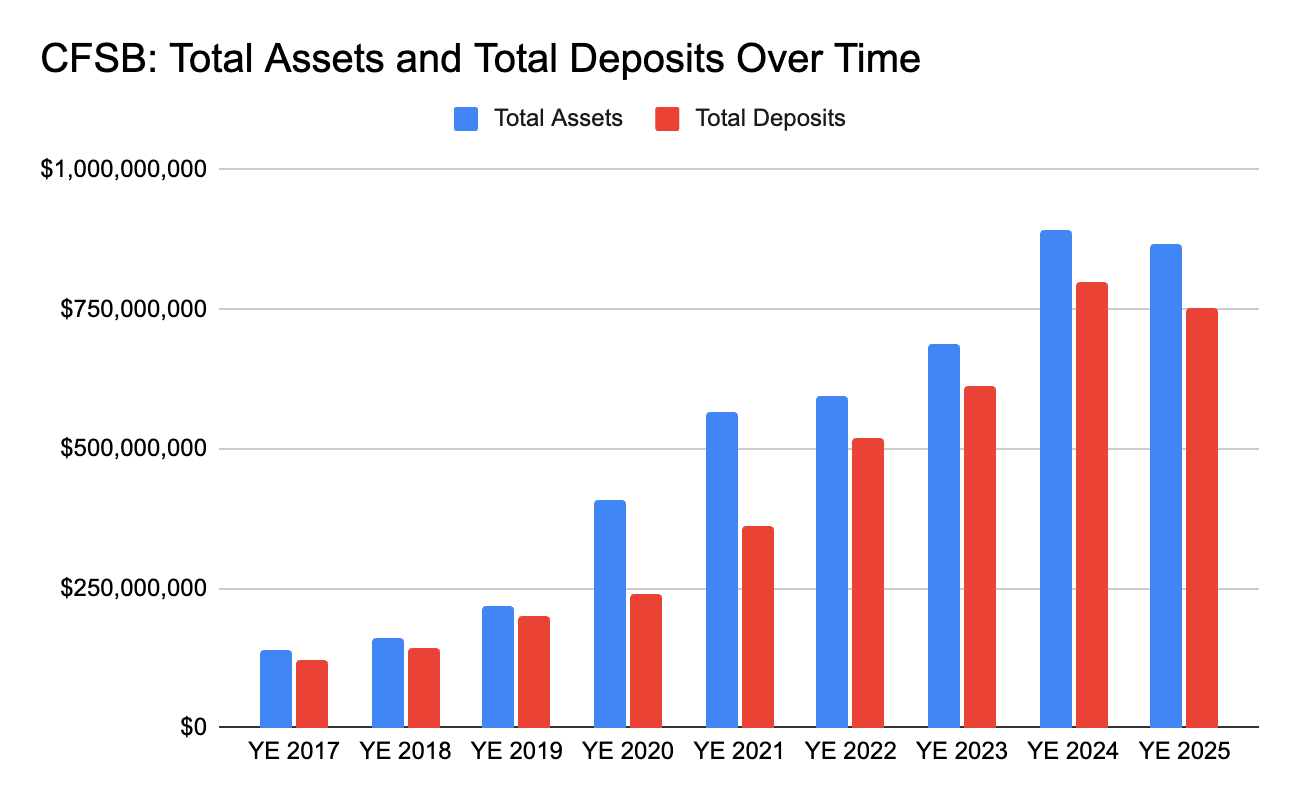
The key to CFSB’s rapid growth? Fintech partnerships.
In addition to a relationship with middleware platform Synctera, CFSB programs over the years have included a significant number of multi-currency/cross-border and international programs:
Airwallex, an Australian fintech that offers business multi-currency accounts and international payments
ChipperCash, an African remittance and payment startup for both consumers and businesses
CurrencyWave, which offers multi-currency accounts and international payments to consumer and businesses
LemFi, a UK-based fintech offering multi-currency accounts and international payments to consumers
Payoneer, an international payment processing platform for businesses and freelancers
Truly, which offers multi-currency “global” business accounts and international payments
WireBarley, an international remittance service for consumers and businesses
Wise, which offers multi-currency accounts and cross-border payments to consumers and businesses
Yorbis, a multi-currency and cross-border service for businesses
Nomad, which offers US consumer bank accounts, remittances, and investing to users in Brazil
Zolve, which offers US consumer bank accounts, credit cards, and related products, primarily targeting foreign students in India who plan to attend school in the US
CFSB has also worked with a number of crypto/digital asset programs, including Crypto.com.
This newsletter flagged the growing risks in CFSB’s programs in September 2024, noting at the time that:
At least three of these firms have run into legal issues. For example, Airwallex and Wise have been linked to a $5 million crypto “pig butchering” scheme, first reported by Fintech Business Weekly.
Wise’s relationship with another of its bank partners, troubled Evolve Bank & Trust, abruptly ended last October, after Wise allegedly facilitated transfers to Hamas-linked entities in Gaza.
And Payoneer, licensed as a money transmitter in the US, reached a settlement with the New York Department of Financial Services last November over sanctions violations.
Per that settlement, Payoneer facilitated 2,220 commercial transactions from 2013 through 2018 to entities in sanctioned jurisdictions like Iran, Crimea, Sudan, and Syria, as well as to individuals on the Specially Designated Nationals (SDN) list.
What’s In CFSB’s Enforcement Action?
CFSB entered into a formal agreement with its primary federal regulator, the Office of the Comptroller of the Currency, in 2014. The agreement stemmed from issues with the bank’s board and management oversight, strategic planning, earnings performance, and, yes, BSA/AML-related problems.
The 2014 agreement was terminated in 2020, but was functionally replaced with a more narrowly tailored agreement that no longer included BSA/AML in its scope. The 2022 agreement was terminated approximately two years later, in January 2022.
The agreements required the bank to develop a business and profit plan, ensure that the bank had “competent management in place,” including its BSA Officer, revise and adhere to a Suspicious Activity Report (SAR) program that meets legal and regulatory requirements, and develop and implement policies to comply with OFAC requirements.
When Fintech Business Weekly reached out to CFSB in mid-2024, a bank spokesperson said at the time that the bank was “not currently under an enforcement action, nor do we have knowledge of any pending regulatory enforcement action.”
But, last week, the OCC publicly released a consent order CFSB entered into this April. The enforcement action is notable in an environment where the OCC has been far more active in terminating existing consent orders vs. entering into new ones.
The enforcement action focuses narrowly on BSA/AML-related issues, and contains the unusual clarification that the regulatory action is “based on concerns largely unrelated to customers involved in digital assets activities.”
The order notes that CFSB “has significantly grown its payment processing line, relative to its size, resulting in significant annual wire and ACH activity, including cross-border activity involving foreign financial institutions” — reinforcing that asset size alone is a poor heuristic for capturing some of the risks posed by BaaS business models that facilitate high transaction volumes.
Per the order, CFSB “failed to develop and maintain controls and risk management processes commensurate with its risk and growth” and has suspicious activity monitoring processes that are inadequate to identify, investigate, and report potentially suspicious activity.
CFSB’s automated transaction monitoring system, the order says, had “deficiencies” in its data, logic, and methodology, which “resulted in the system auto-closing alerts that should have been escalated for further review.”
The result was that a “very high percentage” of transaction monitoring alerts were automatically closed without investigation.
The order further describes CFSB’s customer due diligence program as “ineffective,” resulting in CFSB being blind to “the nature of certain of its customers’ businesses and the purpose of the transactions in the payment processing line, including risks related to foreign financial institutions.” CFSB “failed to effectively consider risks related to payment processing line customers, including the volume of cross-border transactions,” the order says.
Stunningly, CFSB also “failed to determine whether it had correspondent accounts for foreign financial institutions.” A correspondent account is an account that one bank holds at another, CFSB in this case, that can be used to execute international wire transfers, clear foreign currency transactions, and to access national payment systems.
Because correspondent accounts present higher financial crime risk, banks must be aware if an account is owned by a foreign financial institution. A bank holding a correspondent account for a foreign financial institution should be aware of the jurisdiction, ownership, and nature of the foreign institution’s business.
The order also found CFSB to have weak independent testing of its BSA/AML program.
The upshot is that CFSB’s BSA/AML program has significant deficiencies that include, according to the consent order, “(i) systemic internal controls breakdowns, (ii) weak independent testing, and (iii) weak BSA staffing.”
CFSB’s agreement with the OCC is also notable for what isn’t in it: anything else.
During the wave of enforcement actions against BaaS banks from 2022-2025, which saw around 20 orders from the OCC, the FDIC, and the Fed, BSA/AML issues were one of the most common topics, but board governance and third-party risk management were commonly addressed alongside financial crimes compliance.
Many of the 2022-2025 actions also included business restrictions; for example, a requirement to obtain supervisory non-objection before onboarding new fintech programs. CFSB’s order does not contain any such business restriction.
What Does the Consent Order Require?
CFSB’s consent order requires the bank to stand up a compliance committee to oversee its progress under the order.
The bank must develop an action plan within 90 days and obtain supervisory non-objection to the plan.
The consent order further requires CFSB to:
undertake a comprehensive, end-to-end review and assessment of its BSA/AML Program;
achieve and maintain ongoing compliance with the BSA, including all recordkeeping and reporting requirements;
assess the impact of its activities, product lines, and third-party
relationships on its BSA/AML risk profile based on appropriate data
and information;
identify and evaluate the adequacy of internal controls and assess its residual BSA/AML risk profile, including whether it aligns with its board-approved BSA/AML risk appetite;
develop a customer due diligence program that includes clear definitions of customer risk categories and an effective methodology for assigning a customer’s risk category;
ensure ongoing monitoring is conducted to maintain and update customer information and to identify and report suspicious activity;
ensure the timely identification of correspondent accounts for foreign
financial institutions;
ensure that management’s and staff’s respective responsibilities for
establishing and revising customer risk profiles are clearly defined;
ensure that missing or inaccurate CDD information is timely identified and remediated;
develop, implement, and adhere to a risk-based suspicious activity identification, evaluation, and reporting program;
conduct a suspicious activity lookback review;
implement an independent BSA/AML testing program;
develop, implement, and maintain an acceptable system of internal controls to identify and control the risks associated with money laundering, terrorist financing, and other illicit financial activity;
employ sufficient staff with appropriate training, skills and expertise needed to support the BSA Officer and the BSA/AML Program.

Eight Notable Stats from the Fed SHED Report
The Federal Reserve recently released the results from its 2025 Survey of Household Economics and Decisionmaking (this is the report that the famous “x% of households couldn’t afford a $400 emergency expense” stat comes from.)
The survey was fielded from October 17, 2025, through October 28, 2025, with 13,099 participants completing the questionnaire.
It is worth reinforcing that this is survey data. While the Fed, no doubt, has a statistically sound methodological approach, there are a host of gaps and challenges in interpreting survey data, including that what respondents say — stated preference — does not always align with how respondents actually behave — revealed preference.
For those who are curious, the full survey instrument showing questions and answer choices is available in the survey’s appendix.
With that, here are eight(ish) stats from the 2025 SHED report I found notable.
1. Self-Reported Financial Well-Being Broadly Stable (as of October 2025)
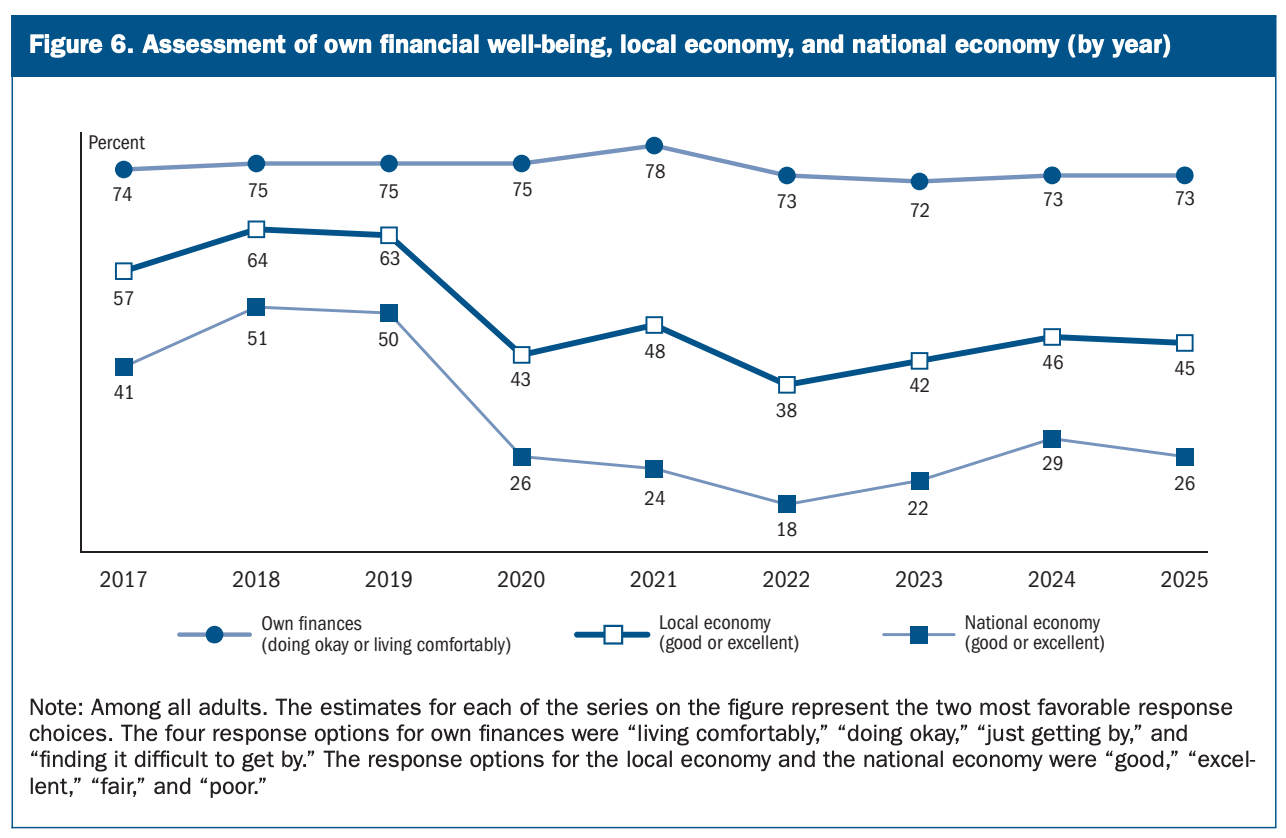
Given the ongoing military conflict in Iran, elevated energy prices, and the prospect of resurgent inflation, it is worth reinforcing that the survey was fielded in October 2025.
As of that time, respondents self-assessed financial condition was remarkably stable, with 73% indicating they were “doing okay” or “living comfortably” — more or less the exact same proportion as in the prior three years (top line in the graph above).
Notably, while respondents perception of their own economic situation was generally positive, their perceptions of their local and the national economy were markedly worse. Only 45% thought their local economy was “good” or “excellent,” and a mere 26% said the same about the national economy.
2. Price Increases Are Top Financial Challenge or Concern
In September 2025, the month prior to the survey being conducted, the consumer price index reflected a 3% increase year over year — firmly above the Fed’s long-range 2% target, but a far cry from the 9.1% rate inflation peaked at in June 2022.
But with stubbornly high housing prices and an increasingly stagnant job market buttressed by fears that AI will replace white collar workers, “affordability” has remained top of mind.
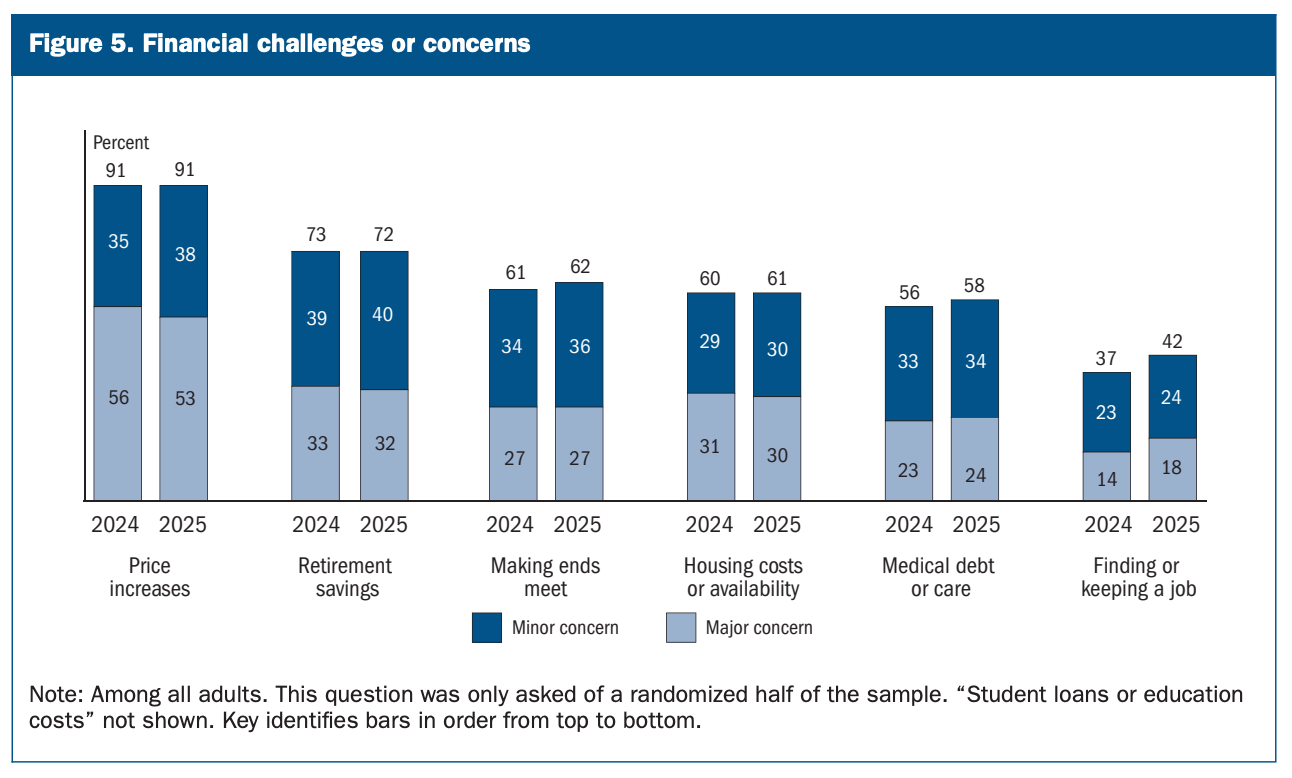
Fifty-three percent of respondents cited price increases as an area of “major concern,” slightly down vs. 2024, with 38% saying prices are an area of “minor concern,” up 3% points vs. 2024.
3. How Americans Are Adapting to Higher Prices
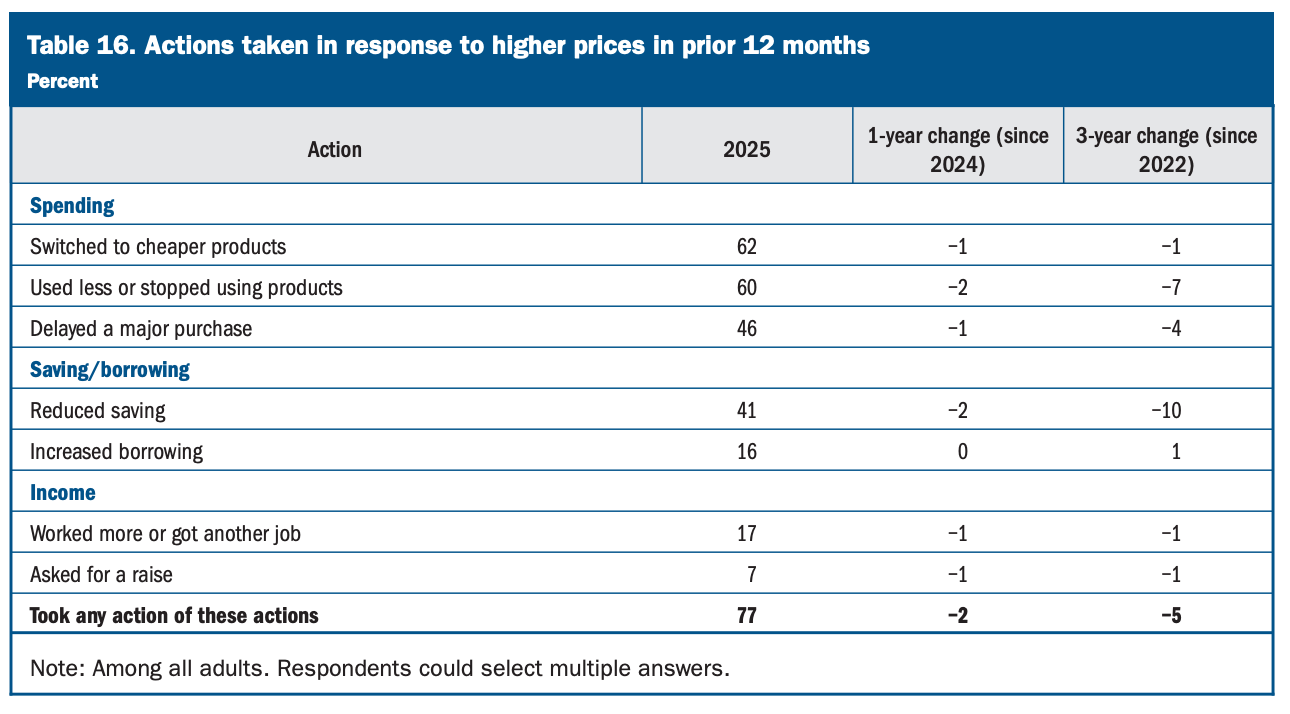
The survey asked Americans how they’re responding to higher prices. The most common tactics include switching to cheaper products (62% of respondents), using less or ceasing to use certain products (60%), and delaying major purchases (46%).
Respondents also indicated they’re coping by reducing how much they’re saving (41% of respondents) and, more worryingly, by increasing borrowing (16%).
4. Thirty-Seven Percent Couldn’t Afford a $400 Emergency (sort of)
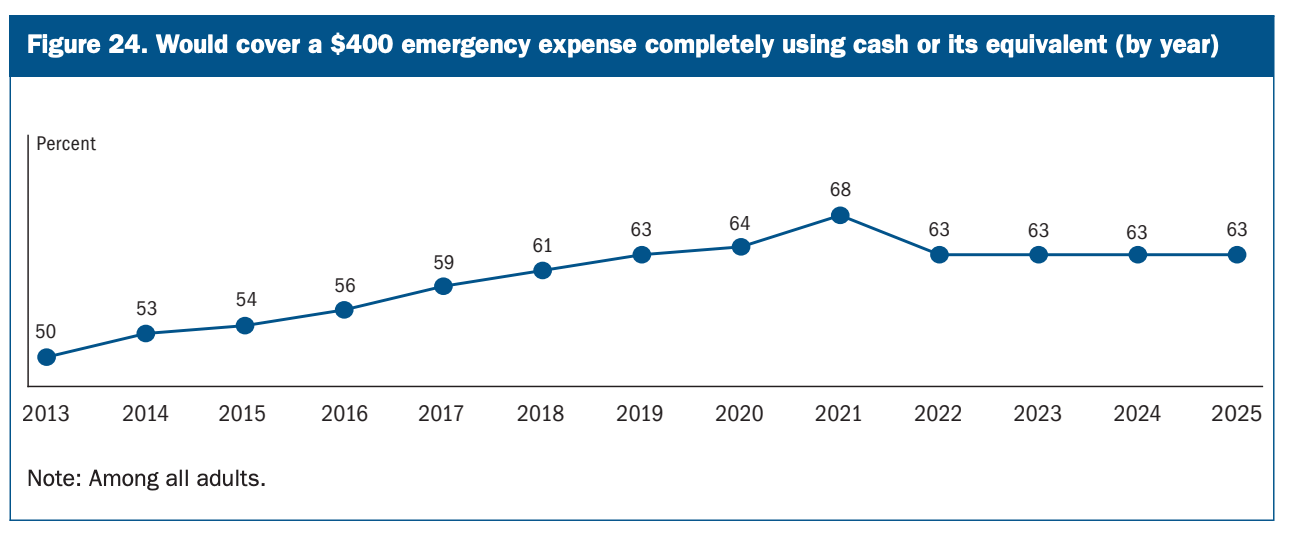
Seemingly the most cited statistic in fintech, the stat has remained unchanged since 2022.
It is worth noting that the exact question posed to respondents is: “Suppose that you have an emergency expense that costs $400. Based on your current financial situation, how would you pay for this expense?”
The SHED report clarifies that “[s]ome of those who would not have paid an unexpected $400 expense completely with cash or its equivalent likely still had access to $400 in cash. Instead of using that cash to pay for the expense, they may have chosen to preserve their cash as a buffer for other expenses.”
5. Vehicle and Home Repairs Most Common Unexpected Expenses
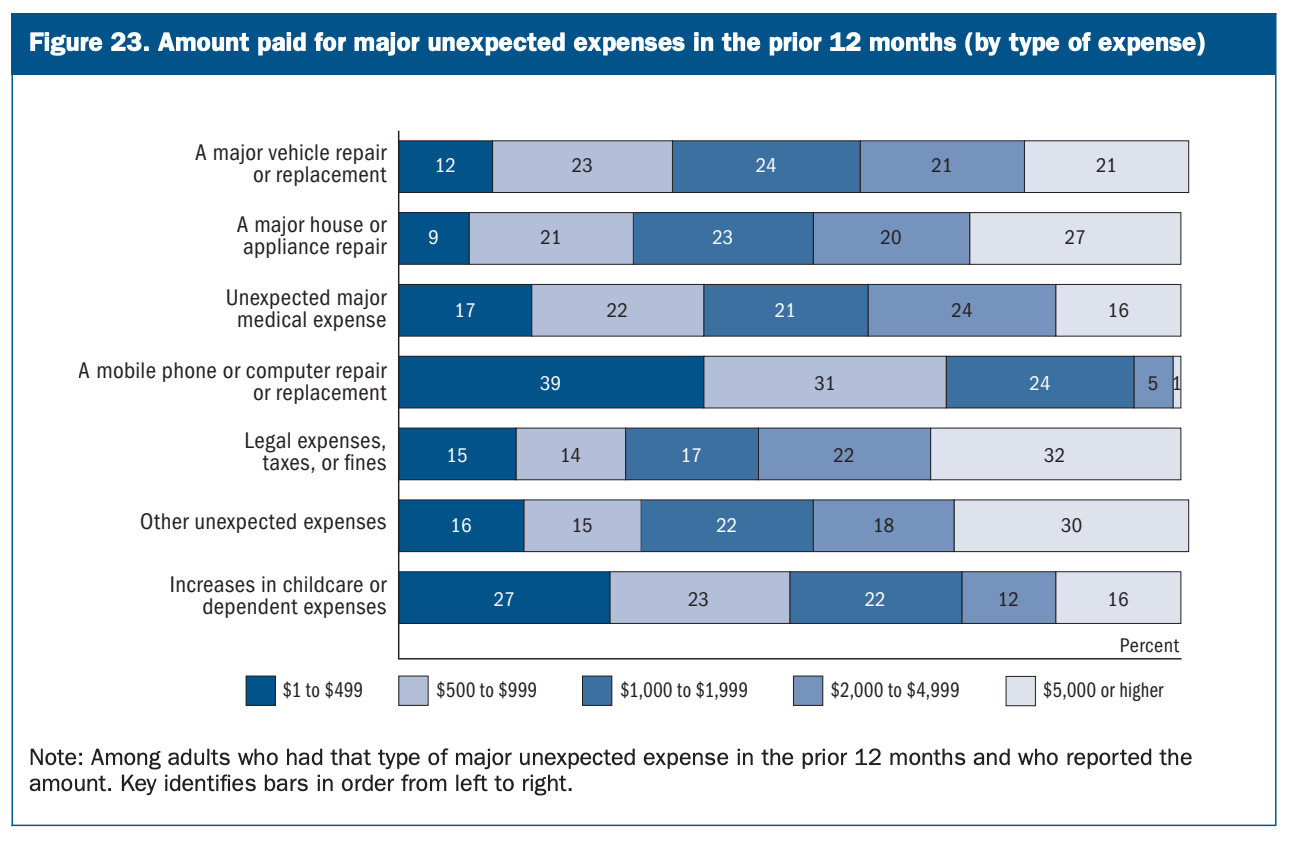
Just shy of six in 10 respondents (59%) reported having a major unexpected expense in the 12 months prior to the survey. The most common being a major vehicle repair or replacement (30% of respondents) and a major house or appliance repair (22%). House/appliance and vehicle repairs skew more expensive vs. other categories of unexpected expenses, like a phone or computer repair or an increase in childcare or dependent care expenses.
6. Share of Unbanked Households Flat at 6%
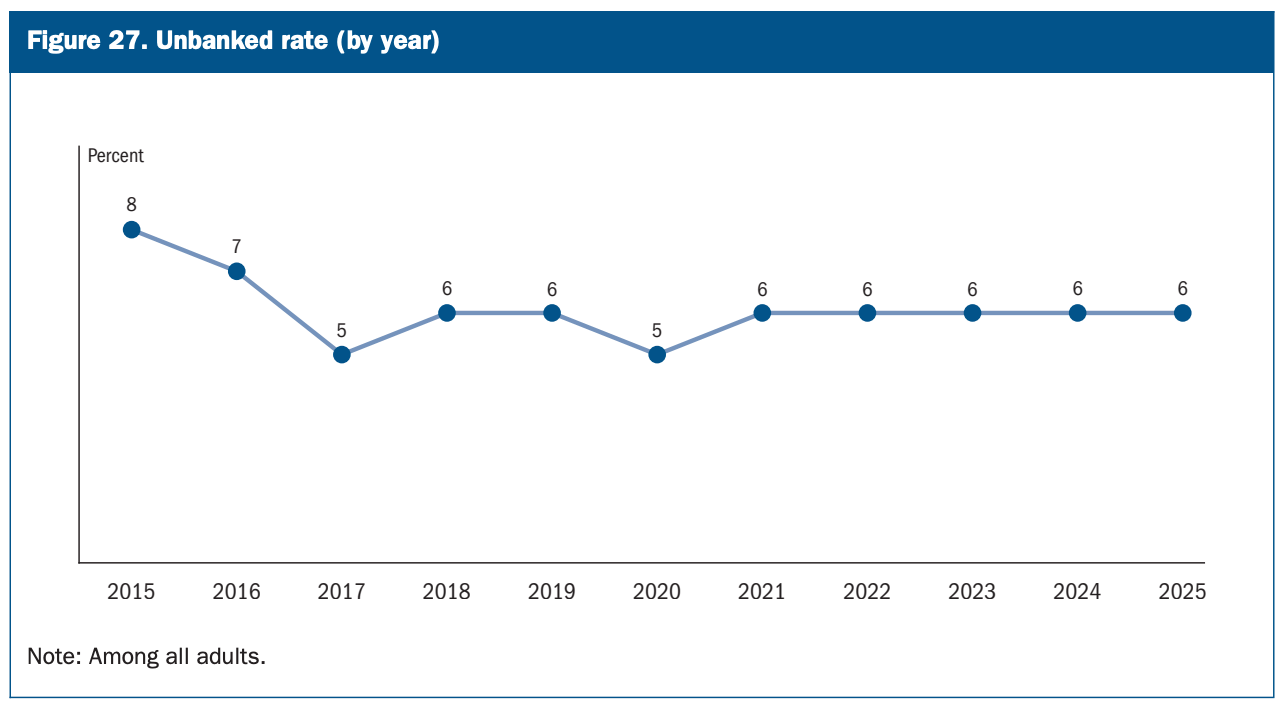
The share of unbanked households has functionally remained unchanged since the mid-2010s — despite the growth of digital banking services since then.
Unsurprisingly, there is a strong correlation between income and unbanked status, with 21% of households with income below $25,000 being unbanked vs. 1% for households earning $100,000 or more per year.
7. Only 10% of Americans Report Any Use of Crypto
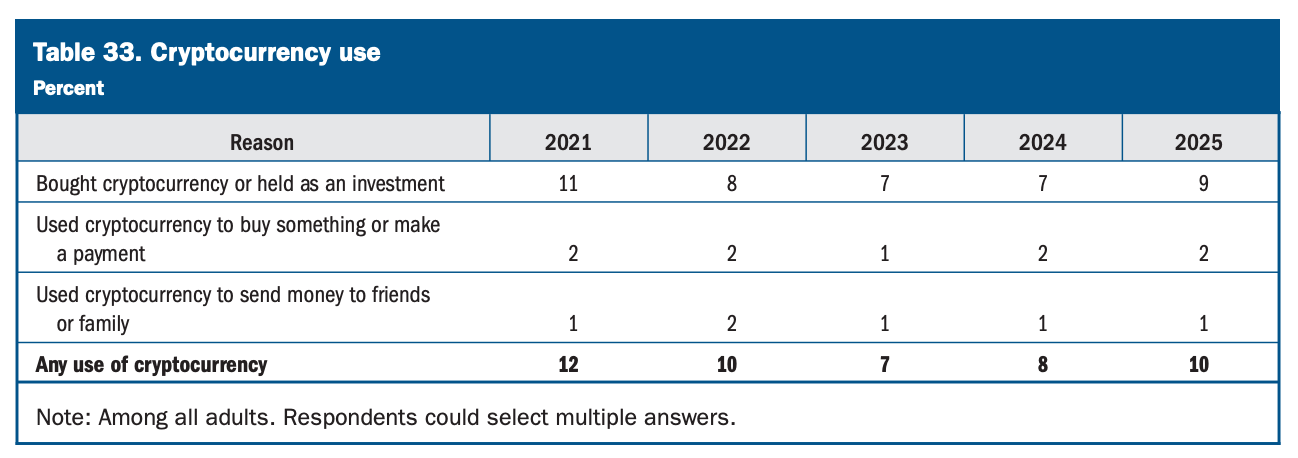
According to the report, 10% of respondents reported any use cryptocurrency in the past year, up 2% points vs. 2024, but still lower than the peak of 12% of respondents in 2021. Of those reporting any use of cryptocurrency, the primary activity was buying crypto and/or holding it as an investment.
This is another case where it is worth paying attention to the specific question posed to respondents: “In the past year, have you done the following with cryptocurrency, such as Bitcoin or Ethereum?”
It’s not clear to what extent respondents would consider stablecoins, the most popular of which are Tether (USDT) and USDC, as “cryptocurrency” for the purposes of their answer.
Further, financial services companies are increasingly using stableoins behind the scenes and/or ‘abstracting away’ user-facing complexity, meaning Americans may actually be using “cryptocurrency” without realizing it.
8. BNPL Use, Late Payments Climb
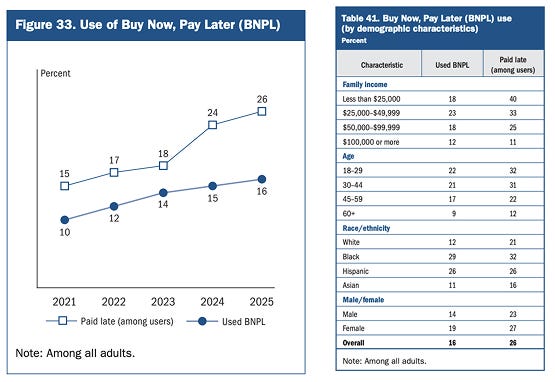
The SHED survey has showed a steady increase in the share of respondents who report using buy now, pay later services.
Since 2021, the proportion of respondents who indicating using BNPL in the prior 12 months has increased by 6% points.
However, of those using BNPL, the share of those reporting late payments on their BNPL plans has jumped significantly, from 15% in 2021 to 26% in the 2025 data.
Paying Subscriber Exclusive: Chime CEO Teases Bank Ambitions, Trump EOs, CAMELS Refresh
During an appearance at a JPMorgan Chase investor conference, Chime CEO Chris Britt said, “It’s, to some degree, an inevitability that we’ll become a bank; the question is just, when?,” according to reporting from Banking Dive.
“Every year, we take a step back and evaluate, is now the time?” Britt added.